Rainforest Info

Rainforest terms can be found here
Informative web links can be found here

Commonly Asked Questions and Facts

What is a rainforest?
A rainforest is an ecosystem in which annual rainfall exceeds 100 inches, and in which neither rainfall amounts nor temperature vary much from month to month.

Rainforests of the world

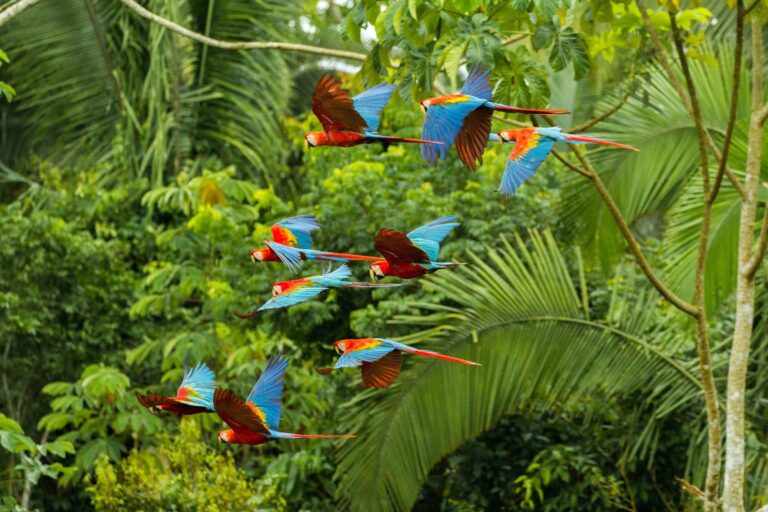
Tropical rainforests surround the earth's equatorial zone and are warm, humid places, which provide shelter and sustenance for an enormous variety of animal species, they are also home to 50 million Indigenous peoples. Although tropical forests cover less than 7% of the earth's surface they are home to approximately 50% of all living things on earth.

What is Amazonia?
Amazonia is a region that includes most of Brazil and parts of bordering French Guiana, Guyana, Suriname, Venezuela, Colombia, Ecuador, Peru and Bolivia. Amazonia can be visualized as a funnel (with its wide end at the Andes) draining some six million square kilometers through a complex of rivers that are tributaries of the Amazon River.

The Amazon River has the greatest volume of water of any river in the world. It is navigable along its entire 4000 mile length (6,400 km).

The Amazon is also extraordinarily rich in biodiversity. According to Conservation International, a very large number of Amazonian plant and animal species are "endemic", meaning that they are found there and nowhere else. Recent estimates indicate that in the Amazon one can find:

  • 18,000 varieties of plants (c.13, 680 endemic)
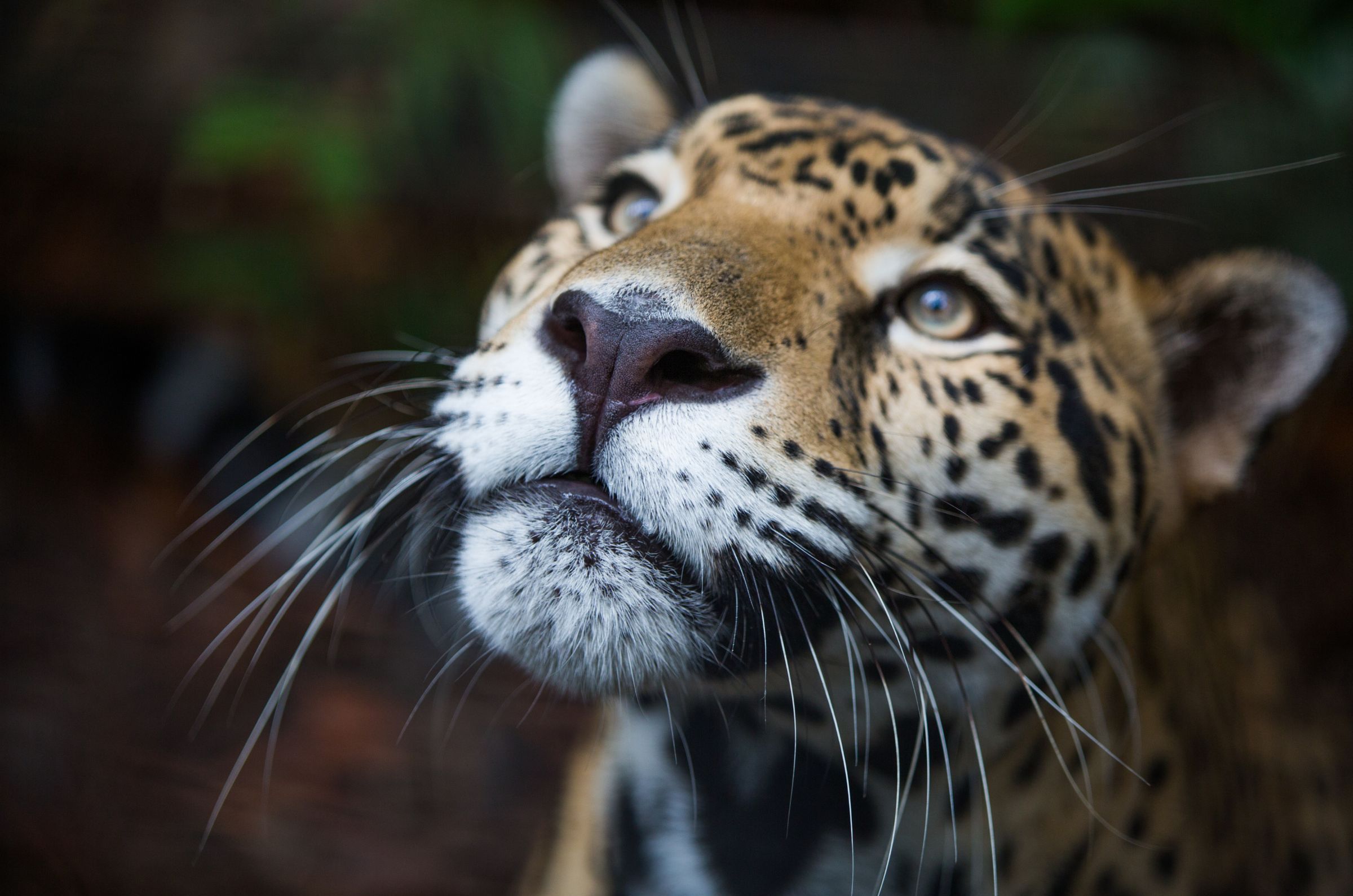
  • 434 species of mammals (138 endemic)
  • 239 reptile species (59 endemic)
  • 225 species of amphibians (203 endemic)
  • And more freshwater fish and primates than anywhere else on the planet!

Is all rainforest in Amazonia?
No! There are very large and important rainforests in tropical Asia, Africa, Central America and the Caribbean, as well as in South America and a few temperate regions such as the Pacific Northwest. The largest expanse of rainforest in the world, however, is in Amazonia.

How old is the rainforest?
Rainforests have been around for tens of millions of years. The geographical extent of this ecosystem has expanded and diminished under the effect of continental drift and glaciation.

How much rainforest is gone?
In many parts of the tropics, current forest cover is only a fraction of what it was 50 years ago. For example, only 5% of Brazil's incomparable Atlantic coastal forest remains. While the Amazonian rainforest is still largely intact due to its great size, recent data have shown that the scale and rates of deforestation there are actually greater than many published estimates, not less.

Are rainforests the lungs of the earth?
No, but mature forests such as the Amazon and elsewhere store huge amounts of carbon, found in vegetation. Burning the vegetation releases carbon dioxide.

Will rainforests regenerate?
In some cases this is possible, but the new forest will be a much poorer habitat, home to many fewer species of plants and animals. Rainforest fragmentation leads invariably to biodiversity loss.

What do we use rainforests for?
Rainforests are crucial to all humanity. Their destruction creates greenhouse gases that contribute to climate change. In addition, rainforests provide many other important benefits. For example, approximately 121 useful drugs currently on the market are obtained from plants, and over a third of these originated in tropical forests. Similarly, much of the food we eat - coffee, bananas, lemons, oranges, cacao, cashews, peanuts, pineapples, papayas, and many more! - comes from tropical forests.

Forests regulate water and protect watersheds. Without the canopy breaking the force of heavy downpours, rain can dissolve pastures and cropland into mud slides. The canopy allows rainfall to slowly trickle down, rather than rush into rivers and flood the surroundings. In 1998, for example, Hurricane Mitch left 11,000 people dead and many more homeless in Central America. The destruction was caused primarily by deforestation.

What are the major threats to the rainforest?
Uncontrolled extraction, logging, road development and infrastructure projects (such as roads, dams, etc.) also threaten the people that live in and rely upon the rainforest for their survival.

Source:New York Botanical Garden

Indigenous and traditional peoples

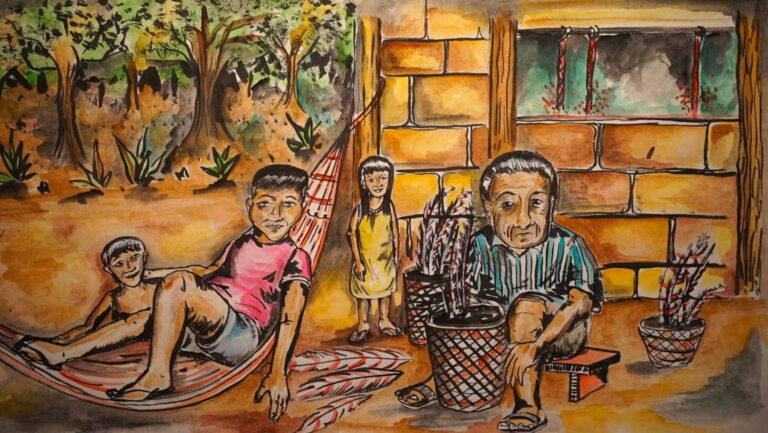
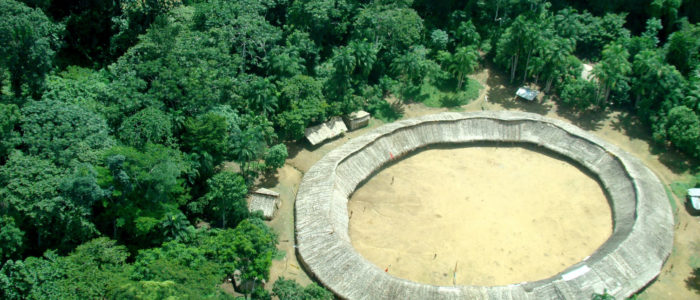
The Amazon is the home and the source of their life and culture of indigenous and traditional peoples. Indigenous people have a close and age-old connection to the environment. As the Amazon is destroyed, their ways of life change and become poorer economically, culturally, linguistically and politically.

According to Survival International (2000), 940,000 indigenous people live in the Amazon. In addition, there are fisherfolk, rubbertappers, Maroons, Quilombolas, and other traditional peoples who depend on a healthy forest and environment for their survival.

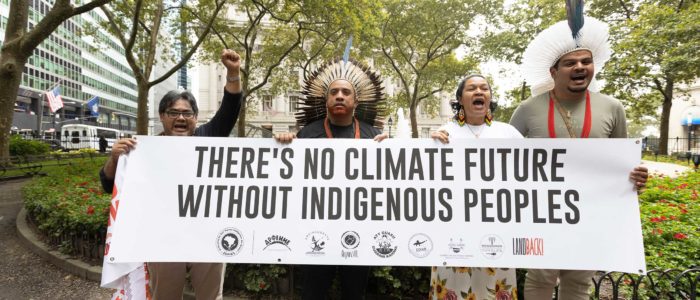
A crucial priority for indigenous people is gaining the rights to the land they live on. Indigenous lands make up 20% of the preserved areas in the Brazilian Amazon. On satellite maps, one can see that indigenous and traditional peoples lands are some of the only preserved areas. The right to the land enables indigenous and traditional peoples to choose for themselves how their ancestral land will be used and to prevent unwanted development such as mining, logging, ranching and deforestation.

In Brazil, at the time of European contact, indigenous people numbered around 5 million. It has since dropped to less than 200,000, and anthropologists believe that a forest dwelling tribe has been lost in Brazil every single year since 1900.

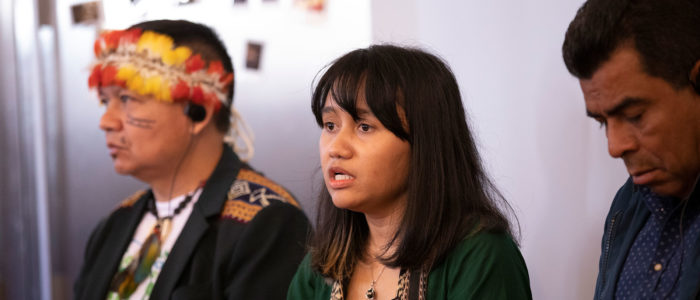
Indigenous people of the Amazon in Colombia control 15 million acres of land among more than 50 ethnic groups and 70,000 people. Chiribequette Park, created in 1989, protects 2.5 million acres, some of which is the indigenous peoples territory. Colombian law protects the peoples rights to follow their own customs and traditions and develop and organize their own health and education services.

80 % of the world's biodiversity is found on indigenous lands!

Did you know?

  • The current rate of destruction is 2.47 acres/second, which is approximately two US football fields. Expanded, that amounts to 64 acres/min, 3,800/hour, 93,000/day, 2.8 million/month, and 33.8 million acres per year.
  • The natural extinction rate is approximately 1 species per year. As a result of deforestation, species will become extinct at a rate 3 to 4 times higher than that.
  • Tropical forests comprise approximately 7 percent of the earth's dry land surface (2% of total surface) and sustain over 50 percent of all species.
  • The Amazon River basin contains 20% of the world's fresh water.

Remarkable things you can find in tropical forests

  • 80% of all insects live in tropical forests!
  • In Borneo, 700 tree species were found in 25 acres!
  • In Columbia, there are over 1,500 bird species!
  • In the Tambopata Reserve in Peru, 43 ant species were found on a single tree!
  • In Panama, 18,000 beetle species were found in only 2.5 acres of forest!