Brazilian Supreme Court Judge upholds demarcation of Raposa Serra do Sol

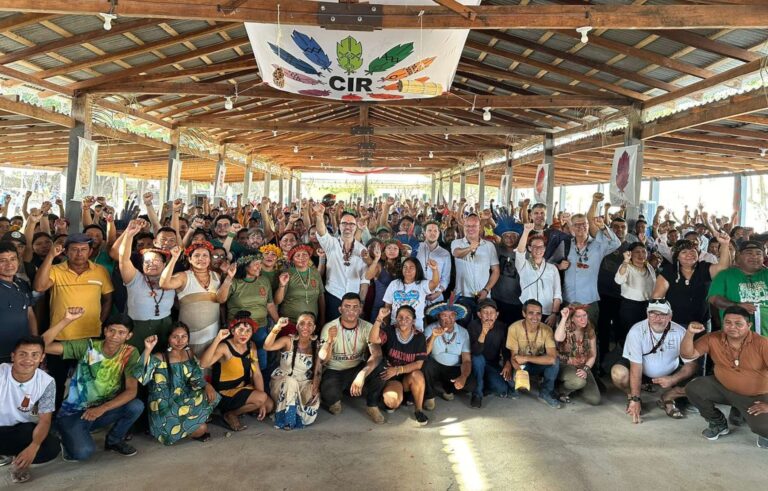
In a critical decision on August 27, one of Brazil’s Supreme Court Judges voted in favor of maintaining Raposa Serra do Sol (RSS) as a continuous indigenous land. Although the other judges on the Court still need to vote on the matter, this was seen as an important victory for indigenous peoples. Minister Ayres Britto’s decision was celebrated by the indigenous peoples of RSS, who had been mobilized in their communities, as well as in the state capitol and outside the Supreme Court in Brasilia.

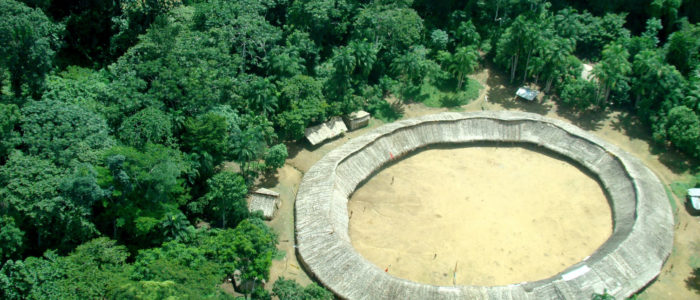
Raposa Serra do Sol is the traditional home of some 19,000 Ingaricó, Macuxi, Patamona, Taurepang and Wapichana people in Northern Brazil. Located on the boundary of Guyana and Venezuela, RSS is over 6,000 square miles of mountains, savannahs, and forests.

In April 2005, President Luis Inácio Lula da Silva ratified RSS as an indigenous land, recognizing over 30 years of struggle of the indigenous peoples of the area.As stipulated by the decree, all non-indigenous occupants should have been removed from RSS within a year. A handful of powerful rice-growers refused to leave however, and vowed to use force in order to remain. In March 2008, the Federal Government finally began a process of removing the remaining occupants. They resisted, burning bridges and attacking community centers, and instigating violence that culminated in the shooting of ten indigenous people on May 5th.

By then,the State Government had filed an injunction asking for the removal process to be stopped, and questioning the demarcation of RSS as a whole.The Supreme Court suspended the removals, and set August 27 as the date it would rule on the demarcation.

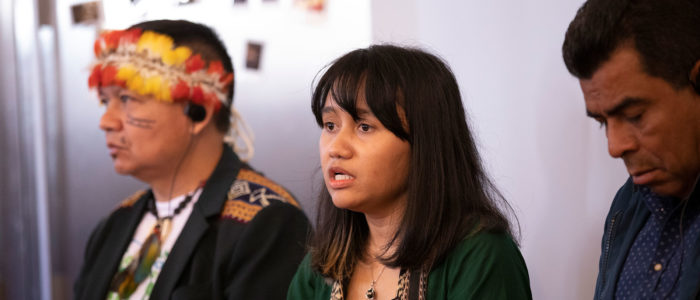
The rice-growers and their allies, including the state government, question the recognition of RSS as one contiguous area. They want to carve some of the most productive lands out of RSS, and allege that the demarcation hampers development in the state. Further, they cite risks to national sovereignty, given the boundaries with Guyana and Venezuela. These arguments were forcefully put to rest by Minister Ayres Britto, who refuted the sovereignty issue based on the Brazilian Constitution. He furthermore called the rice-growers’ activities “unmasked plunder”, and questioned why they should retain the best lands in RSS, and indigenous peoples be driven away. In the words of Joenia Batista de Carvalho, a Wapichana lawyer and head of the Indigenous Council of Roraima’s legal department: “We’re accused of being thieves on our own land. We’re slandered and discriminated against, and this has to end”. The August 27 ruling was also historic in that Joenia was the first indigenous lawyer to defend her people in the Supreme Court of Brazil.

The Supreme Court’s decision will have an enormous impact on the indigenous peoples of RSS. It will also be used as a precedent for over a hundred similar cases currently before the Court – and, if they rule against maintaining RSS as a continuous area, could affect indigenous lands throughout the country. This would be a tremendous blow to indigenous peoples, and to their rights as enshrined in the 1988 Brazilian Constitution. For this reason, all of us who work on indigenous rights and environmental issues in Brazil have been following the case closely.

Eleven judges, or ministers, sit on the Brazilian Supreme Court. For each case, one of them is appointed as the rapporteur; he or she then studies the case at hand, and issues a decision. The rest then vote to go along with that decision, or against. In this instance, another Minister asked to review the case, meaning it is on hold until he has been able to do so and another session is scheduled. This will likely take place before the end of the year, and the rest of the Ministers on the Supreme Court will then cast their votes.

Minister Ayres Britto’s important vote was a strong reaffirmation of indigenous rights in Brazil. We will be following the case closely, and hope the others will follow his lead.

More information (in Portuguese):

Indigenous Council of Roraima’s website

Dossier of information on RSS

Minister Ayres Britto’s decision


Indigenous people shot by gunmen in Raposa Serra do Sol

On the morning of May 5, 2008, ten indigenous people in Raposa Serra do Sol were attacked and shot at by a group of gunmen. The gunmen apparently arrived shooting, without giving people any chance to defend themselves. All of the victims are now out of danger, though for a while it was feared it could have been much worse. The gunmen were allegedly employed by the leader of the rice-growers in the area, Paulo Cesar Quartiero, who was arrested on Tuesday for attempted homicide, gang formation, and possession of explosives. Federal Police are now in the area, following a request for protection from the communities.

This latest violence comes in the midst of a particularly tense situation in which a handful of powerful rice-growers refuse to leave, despite presidential ratification of the area. In late March, the federal government announced plans to remove the rice-growers and their followers, who in turn barricaded roads, burned bridges, threw home-made bombs and threatened communities. The state government filed an injunction against the removals, which was accepted by the Supreme Court. The Court will decide on the matter in the coming weeks, and have indicated that they may revise the actual demarcation of the area, which would be a tremendous step backwards for indigenous rights in Brazil. Meanwhile, communities in RSS decided to build houses on what is legally recognized as their traditional land, in a non-violent effort to reclaim lands invaded by the rice growers. It is in this context that the latest violence has taken place.

We will be monitoring the situation closely, and will keep you updated. Please check back for updates and potential requests for urgent action.

Following is a letter sent by the Indigenous Council of Roraima to the authorities:

Boa Vista – RR, May 5, 2008
To the authorities:
This morning (05/05/2008) at 10 am, ten indigenous people in Raposa Serra do Sol were shot at by gunmen hired by the rice-grower Paulo César Quartiero.

Their names are: ALCIDES, JEREMIAS, LENE, GLENIO, TIAGO, ERIVALDO, XAVIER, CLEBER and two others, as yet unidentified. One of them is in a very serious condition, having been shot in the head, ear, and back.

The indigenous communities of Raposa Serra do Sol were building homes on their own land, when a pick up truck and five motorcycles, coming from Quartiero’s Deposito Farm – arrived, shooting on all sides in an effort to prevent people from building the houses.

One of the gunmen was identified as “Roberto”. They escaped soon afterwards. The victims are being brought to Boa Vista by the Federal Police.

CIR and the indigenous communities have denounced that the invading rice growers have impeded free circulation, and brought in gunmen. Despite this, nothing has been done. This new violence confirms the need to punish Paulo César Quartiero, who is behind the violence, and remove him immediately from our lands.

Indigenous communities are revolted with what has taken place on their own land, their home, where they are humiliated and their goods destroyed – and their people threatened and shot at.

In face of the violations of the human rights of the indigenous peoples of Raposa Serra do Sol, the Indigenous Council of Roraima requests that URGENT and IMMEDIATE measures be taken.

Sincerely,

Terencio Manduca
Vice-Coordinator